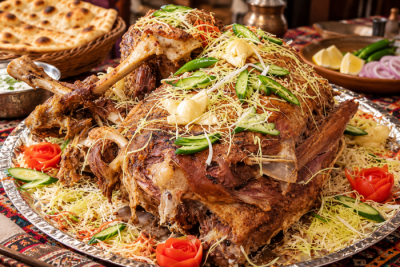
Namkeen gosht is a Peshawari dish of bone-in mutton slow-cooked with salt, black pepper and its own fat until the meat falls off the bone. In Urdu, “namkeen” means salty and “gosht” means meat. Unlike most Pakistani curries, it uses almost no spices, so the natural flavor of the mutton shines.
In Peshawar, namkeen gosht sits beside dumpukht, a close cousin cooked in a sealed pot. Both dishes come from the same Pashtun and Afghan traditions. In this guide, you’ll learn what makes each one special, how they compare, and how to cook them at home. Finally, we’ll show you where to eat them and how to order online.
What Is Namkeen Gosht?
At its heart, namkeen gosht is simple food done slowly. Cooks start with fresh mutton, usually shoulder or ribs, and a generous piece of mutton fat called charbi. Then they add salt and let the meat cook gently in its own juices for hours. As a result, the fat melts, the meat turns tender, and the gravy reduces to a thin, rich coating.
Some versions add tomatoes, green chilies or ginger at the end. However, traditional cooks keep it plain, because good meat needs nothing else.
Why Peshawar Loves It
Peshawar has a long tradition of meat-focused cooking. For example, the famous Namak Mandi area built its reputation on karahi, tikka and simple salted mutton. In addition, winter makes namkeen gosht especially popular, since its rich, warming fat suits cold evenings. Today, families order it for weekend dinners, guests and celebrations.
What Is Dumpukht?
Dumpukht comes from Persian words meaning “breath” and “cooked.” In other words, the food cooks in its own steam. Cooks place large pieces of lamb or mutton in a heavy pot with salt and fat. Next, they seal the lid with dough so no steam escapes. Then the pot sits over very low heat for several hours.
How the Sealed Pot Works
The dough seal traps every bit of moisture inside. Therefore, the meat braises in its own juices without drying out. When the cook finally breaks the seal, the meat comes out soft enough to pull apart with your fingers. Many Peshawar restaurants also serve dumpukht with rice, similar to Afghan-style platters.
Namkeen Gosht vs Dumpukht vs Rosh
These three dishes share the same simple spirit, but each has its own character:
| Namkeen Gosht | Dumpukht | Rosh | |
|---|---|---|---|
| Cooking method | Slow-cooked in an open or covered pot | Sealed pot, steam-cooked | Slow-boiled in light broth |
| Main seasoning | Salt, black pepper, mutton fat | Salt, fat, sometimes whole spices | Salt, onions, light broth |
| Texture | Tender, with a thin rich gravy | Very soft, juicy, fall-apart | Soft meat in soupy gravy |
| Best with | Naan | Rice or naan | Naan |
In short, choose namkeen gosht for rich, concentrated flavor, and dumpukht for the softest meat. Similarly, if you enjoy broth-style dishes, explore traditional rosh in Peshawar.
How to Make Namkeen Gosht at Home
Making namkeen gosht at home takes patience rather than skill. Below, you’ll find both the stovetop method and a dumpukht-style sealed pot version.
Prep time: 15 minutes · Cook time: 2 hours · Servings: 4
Ingredients
- 1 kg bone-in mutton (shoulder or ribs), cut into large pieces
- 100–150 g mutton fat (charbi), or ½ cup ghee
- 1½ tsp salt (adjust to taste)
- 1 tsp coarsely crushed black pepper
- 1 cup water
- 2 tomatoes, halved (optional)
- 3–4 green chilies (optional)
- 1 tbsp fresh ginger, cut into thin strips (optional)
Step-by-Step Method
Stovetop Namkeen Gosht
- First, melt the mutton fat in a heavy pot or karahi over medium heat until it releases its oil.
- Next, add the mutton and salt. Sear the pieces on high heat for 8–10 minutes, turning them until they brown lightly.
- Then add the water, cover the pot and lower the heat. Let the meat cook gently for 1½–2 hours, stirring now and then.
- After that, check the meat. If the pot dries out before the meat softens, add a splash of water.
- Once the meat turns tender, remove the lid and cook on medium heat until the liquid reduces to a thin, glossy gravy.
- Finally, add the black pepper, plus the tomatoes, green chilies and ginger if you like. Cook for 5 more minutes and serve hot.
Dumpukht Version (Sealed Pot)
- First, layer the meat, fat and salt in a heavy pot. Add ½ cup of water only.
- Next, roll a rope of simple flour dough and press it around the rim to seal the lid tightly.
- Then cook on the lowest heat on the stove, or bake at 150°C (300°F), for 2½–3 hours.
- Finally, break the seal at the table for the full aroma, and serve with rice or naan.
Tips for Perfect Namkeen Gosht
- Use fresh, fatty cuts. Shoulder and ribs stay juicy, while lean meat turns dry.
- Don’t rush the heat. Low heat breaks down the meat slowly; high heat makes it tough.
- Add salt early. Early salting seasons the meat all the way through.
- Skip strong spices. Instead, let black pepper and the meat’s own flavor lead.
Where to Eat Namkeen Gosht in Peshawar
If you’d rather leave the slow cooking to experts, Peshawar offers plenty of choices. Moreover, these restaurants list these dishes on their menus.
Shinwari Restaurant (University Road)
Shinwari’s menu includes namkeen gosht alongside Kabuli pulao, karahi and BBQ. As a result, you can build a full Peshawari meal in one order. See the Shinwari Restaurant University Road menu.
[PLACEHOLDER: your tasting notes]
Shinwari Jongara
Shinwari Jongara specializes in slow-cooked meat, with Laham Dampokht and a Beef Dampokht Platter among its signature dishes. Browse the Shinwari Jongara menu in Peshawar for dumpukht platters.
[PLACEHOLDER: your tasting notes]
Charsi Tikka Namak Mandi
For more options, explore our guide to restaurants in Peshawar.
How to Serve and Enjoy It
These rich dishes taste best with simple sides. For example:
- Fresh naan: scoop up the meat and gravy by hand, the traditional way.
- Rice: dumpukht pairs beautifully with a plate of Kabuli pulao.
- Salad and lemon: sliced onions, tomatoes and a squeeze of lemon balance the richness.
- Green tea (kahwa): a hot cup after the meal helps with digestion.
Also, if you love bold mutton dishes, try a mutton karahi in Peshawar next time.
Frequently Asked Questions
[Insert the Yoast FAQ block here; content in section 3 below]
Order Namkeen Gosht Online in Peshawar
Craving slow-cooked mutton tonight? With Zarrasha, you can browse Peshawari restaurants, compare menus and get your order delivered hot to your door. First, download the Zarrasha app on Google Play. Then explore our food delivery service in Peshawar and order your namkeen gosht or dumpukht in minutes.
For home delivery, download the Zarrasha app or contact us on WhatsApp: 0333-111-0724.
Namkeen gosht is a Peshawari dish of bone-in mutton slow-cooked with salt, black pepper and mutton fat. It uses almost no spices, so the meat’s natural flavor stands out. Cooks simmer it for hours until the meat turns tender and the gravy reduces to a thin, rich coating
Namkeen gosht cooks in an open or covered pot, and the gravy reduces as it cooks. In contrast, dumpukht cooks in a dough-sealed pot, so the meat steams in its own juices. As a result, dumpukht turns softer and juicier, while namkeen gosht tastes richer and more concentrated.
No, namkeen gosht is not spicy. It uses salt and black pepper instead of red chili and masala. However, some cooks add green chilies at the end, so ask the restaurant if you want it completely mild.
Namkeen gosht usually takes about 1½ to 2 hours on low heat. The dumpukht version takes longer, around 2½ to 3 hours, because it cooks slowly in a sealed pot. Therefore, plan ahead or order it ready-made from a Peshawar restaurant.
Yes. You can order namkeen gosht and dumpukht from participating restaurants through the Zarrasha app and get them delivered hot to your door in Peshawar. Simply open the app, browse Peshawari restaurants and place your order.